The intention of this blog is only to share the collections. Inadvertently if any file is under copyright, please intimate me so that it can be removed forthwith.
Showing posts with label Is India shining?. Show all posts

Saturday, May 28, 2022

Is India shining?


Eight Years Of Modi Government: A Story Of Transformation
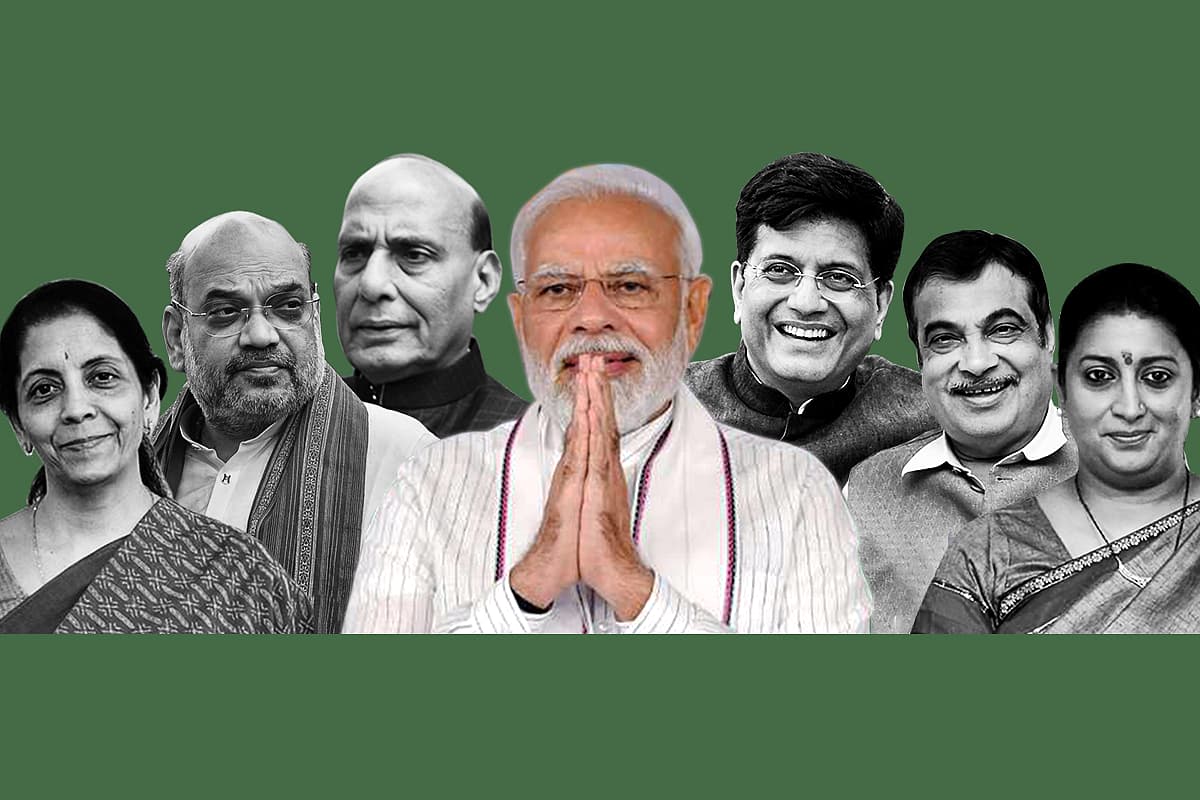
byTushar Gupta-May 27, 2022 01:42 PM +05:30 IST
Eight Years Of Modi Government: A Story Of TransformationEight Years Of Modi Government
Snapshot
  • Here's an evaluation of the Modi regime, factoring in the role of the government in enabling the rural population.

Under the leadership of Prime Minister Narendra Modi, the National Democratic Alliance governed, led by the Bharatiya Janata Party (BJP), has completed eight years in power. Comparisons, therefore, are already underway with the government that was being run in the name of Dr Manmohan Singh, especially on the points of inflation, given the recent alarming uptick in trends due to the Russia-Ukraine crisis, and more recently, the Covid-induced lockdowns in China.

However, beyond the recent short-term shocks to the economy, a larger evaluation of the Modi regime must be made while factoring in the role of the government in enabling the rural population.

To begin with, a note must be made about the tectonic shift in thinking ushered by the Modi government. For the greater part of our independence, until 2014, the government was confused as the parental figure for an average Indian, and therefore, it was a natural expectation for the system to run telephone lines, airports, and several public sector undertakings including banks, airlines, and telecom companies, and most importantly, to push for helicopter money into the system each time there was a slowdown.

A teaser of it was visible post-2008 when at the cost of the stability of the banking system, credit was unleashed for the most notorious of borrowers, and before the elections of 2019, when the Congress proposed the Nyay scheme, promising Rs 72,000 annually for 20 per cent of the Indians, languishing at the bottom of the economic pyramid.

Amongst the voters, however, better sense prevailed, and the idea was firmly rejected in the polling booth, for the people, especially in rural India, wanted the government to be an enabler and not a parental figure anymore. Put simply, they wanted to learn how to catch a fish, and not queue up for it every five years.

Ideally, the role of the government should be to enable an atmosphere conducive for the entrepreneurs to exist, flourish, and consequently create employment, instead of promising jobs themselves. To think that the government can create a certain number of jobs out of thin air is flawed. Further, the government should not be in the business of running businesses. Regulate them, yes, but only as far as it ensures progress for all without shackling innovation and competition.

Even with respect to agriculture, the government must not look to save the farmer each year with credit waivers or overpriced procurements, but usher in legislations that facilitate fair business practices that benefit the farmers, entrepreneurs, and the 1.3 billion consumers.

Narendra Modi, even before being declared the Prime Ministerial candidate in late-2013, advocated these virtues under the slogan of ‘Minimum Government and Maximum Governance’, and his government has delivered on those principles.

Choosing to be an enabler, the government has gone for what the author terms as ‘BMW Socialism’, or bare-minimum-workable socialism that ensures the 800-million odd people in the country, concentrated in villages, should not struggle for basic necessities like housing, water, communication, banking, etc., and instead be directed towards wealth creation, even if it is only for self-sustainability.

What else explains the Jan Dhan Yojana, mocked by the Congress, with over 450 million beneficiaries, more than Rs 1.67 lakh crore in deposits, and over 310 million RuPay cards issued. This has been an enabler for digital payments. Ayushman Bharat, a healthcare cover for over 500 million people, more recently, the vaccination programme that is now closing in on 200 crore doses, and soon, the e-RUPI, to enable digital vouchers.

Go back to the first tenue and recall the success of the Ujala programme, which focused on energy conservation through lighting. Over 36 crore LED bulbs have been distributed until today, cutting carbon dioxide emissions by close to 40 million tonnes annually. To put things into perspective, that figure is equivalent to the emissions from 5.8 million passenger vehicles driven for a year. More on those numbers here.

Similar has been the story with the Ujjwala Yojana, promising gas cylinders for women in rural India. One of the testaments to the tectonic shift in thinking under the Modi regime was when people in urban areas began willingly giving up their LPG subsidies to support the poor. Until today, over 9 crore gas connections have been released under the scheme.

Another example is the Pradhan Mantri Awas Yojana, operating in both rural and urban areas. Under PMAY(U), over 1.22 crore houses have been sanctioned, with over 1 crore being grounded, and close to 60 lakh houses being built already. For PMAY(G), against a total target of over 2.7 crore houses, more than 2.4 crores have been sanctioned, and 1.81 crores have been completed. Funds to the tune of over Rs 2.4 lakh crore have been transferred to the eligible beneficiaries. In the grander scheme of things, the Pradhan Mantri Awas Yojana has transformed the rural landscape, one house at a time.

The list can go, for there are millions of new toilets, piped drinking water connections, and agricultural subsidies, and beyond the rural areas, there are schemes pertaining to other sectors, like the National Infrastructure Pipeline, the National Asset Monetisation, disinvestment from certain public sector undertakings or privatising them altogether, Insolvency and Bankruptcy Code, policies on women and child development, the national education policy.

There is also increased focus on upgrading the railways' infrastructure, pushing for privatising certain routes and projects like the Dedicated Freight Corridor, UDAN yojana, safeguarding the interests of the home buyers in urban areas through RERA (Real Estate Regulatory Authority) or coming to the rescue of many homebuyers through NBCC, revocation of Article 370 in Jammu and Kashmir, development of border roads infrastructure, defence indigenisation, many religious corridors beginning with that of Kashi, insurance for rural population through public sector banks at meagre premiums, collateral-free loans through MUDRA, driving investments worth Rs 2.34 lakh crore in more than a dozen sectors through production-linked incentive schemes and so on.

Many of the above-listed steps deserve a detailed study and elaboration and not mere fleeting mentions, but their acceptance and success amongst the public, even with their imperfections, is no secret, as evident from the electoral victories registered by the BJP.

However, the efforts of the Modi government toward the rural population must not be confused for freebie politics or helicopter money that has today become a hallmark of several political parties, including the Congress. Perhaps, it is better to give a rural family the opportunity to procure a loan to start a small business than Rs 72,000 annually, or to open up the markets of the world and formal credit for the farmers than merely reducing their existence to MSPs and credit waivers. The shift in thinking matters.

One of the most celebrated aspects of the Modi regime would be the digitisation of the economy. It began with Aadhar, which the Congress claims it introduced, but then fiercely stood against the application of post-2014. This was followed by the Jan Dhan Accounts, and finally, cheap internet connections for hundreds of millions of Indians.

The JAM trinity, today, has become the backbone of India’s digital economy. Couple this with the adoption of UPI, the account aggregator framework to ease access to credit, and the upcoming ONDC (Open Network for Digital Commerce) model and one has a booming economy with prospects for every Indian, from the ones wanting to run a fruit juice corner to ones running startups. An elaborate thread marking the importance of the Jan Dhan-UPI-Account Aggregator framework-ONDC model can be found here.

The other key aspect is the formalisation of the economy, and more importantly, of over 63 million MSMEs in India. While a lot needs to be done to further bring these MSMEs into the formal fold, the push for digital payments, online banking, and most importantly, the Goods and Services Tax (GST). While the GST suffered from many tweaks in its first couple of years, it has only improved since then, forcing more companies to register themselves.

The need for MSMEs to be in the formal fold was visible during the pandemic when the government came up with the Emergency Credit Line Guarantee Scheme. Not only will it aid in the expansion of the tax base, but it will also enable ease of credit, employment generation, and other expansion opportunities for MSMEs across India.

Where are the misses, however?

A discussion on demonetisation is inevitable each time the misses of the Modi government are brought up, but was it really one?

The digital payments that we almost take for granted today received their biggest nudge during the earlier weeks post-demonetisation. A lot of money made its way back to the formal economy through sales of goods and expensive metals, even at exaggerated prices in November and December of 2016.

Farm laws, more recently, were the nucleus of Modi’s reform push, and while a majority of the farming in India today passes through the private sector (almost 94 per cent of it) with most APMCs deregularised, a uniform set of laws across the country would certainly help. Perhaps, a fight for another day.

Lastly, there is a need for a land acquisition law that enables the completion of infrastructure projects on time and hinders cost overruns. As per a recent report, 443 projects, each with an investment of Rs 150 crore or more, are going to cost the government Rs 4.45 lakh crore more than the originally estimated cost.

Separately, there are over 500 projects that have been delayed for several reasons, mainly land acquisition, with the average delay time close to four years. Modi’s government's irrefutable intent to build and built needs the backing of a strong law to ensure minimum delays and cost overruns.

The Modi government is far from done, however. The Gati Shakti programme is expected to make news in the years to come. As the Dedicated Freight Corridor becomes operational, the logistics trends across the country will change, becoming an enabler for the economy.

Recently, 5G trials were conducted in Chennai, further presenting opportunities for the digital economy, investment prospects are only getting better with the PLI schemes, and again, the list goes on and on.

For reasons good or bad, the only verifiable process for the success or failure of the schemes by any government is the elections. Not to say that the schemes are without their share of faults or room for improvements, but an election offers the widest perspective on how the impact has been.

For the ones looking to compare the UPA and NDA, the writing is pretty much on the wall, nationally, and across states. As of how things stand today, politically, it will not be an exaggeration to assume that we are only halfway across the Modi era.

Cortesy: Swarajya

Wednesday, May 25, 2022

Is India shining?,


New India’s five big, surprising trends and what they mean ! 🇮🇳

Trend one: India now has more women than men. According to the fifth National Family and Health Survey (NFHS) carried out by the government between 2019 and 2021, India has 1,020 women for every 1,000 men.

Trend two: There are more internet users in Indian villages than in the cities. Rural India has 20 percent more internet users than urban areas, according to a recent study by data and market measurement firm Nielsen.

Trend three: India has seen a sharp decline in fertility rate among women. Fertility among Muslim has shown the sharpest dip at 2.36, while it is still much higher than that of Hindus and Christians at 1.94 and 1.88 respectively.

Trend four: India has surpassed every nation, including China and the US, in digital financial transactions. India had the highest real-time payments among businesses around the world, with over 40 percent of such payments worldwide in 2021 being done here.

Trend five: Indian economy is just about one year away from overtaking that of Britain’s, it erstwhile colonizer.

A healthy sex ratio and a dipping fertility rate means that a new dawn has silently arrived for half of India’s population: women.

A rural India connected by the internet and digital economy is another sweeping change in a remarkably short time. The hinterland is a phenomenally powerful sleeping beast.

The first four trends dovetail into the fifth, which marks the nation’s material wellbeing. But these trends go much beyond economic growth. They signal a civilisational revival, a great rise encompassing the social, cultural, financial and military.

Thursday, April 21, 2022

Wronged, Yet, The Hindu Is Always Wrong.


Around the final quarter of 2019, a group of women, mainly Muslims, began occupying one of the key roads connecting Noida and Delhi. Not far from where I live, this gathering at Shaheen Bagh became a hotbed for resistance against a  law the government had passed. The women and children were the puppets, for the strings were being pulled from somewhere else.


The women were cheered on as icons, and one of them even made it to the Time magazine, for she had led the agenda of the Left, that of the Hindu always being wrong. A Hindu can be forced to convert, kidnapped, harassed, raped, and even murdered in Pakistan, Afghanistan, and Bangladesh, but if a Hindu in India, as a Prime Minister, decides to merely fast track their citizenship amongst that of five other minorities from the three countries, he is wrong. The puppets are right. The rioters are right. The arsonists are right. The Hindu is wrong and, thus, must be wronged.

Last year, around this time, we were consumed by the farmers’ protest in Singhu, a little far from where I live, but as we all realised the magnitude of the Delta variant, another lesson awaited us, that of Hindus always being wrong.

Illegally squatting on a national highway, the farmers were hailed as heroes of the democracy, for they were resisting reforms that would have benefited a sector that makes up for 15 per cent of our GDP and 50 per cent of the working population. They were not questioned for the protest gathering, nor how the Covid norms were sent for a toss. In Uttarakhand, where the average Hindu assembled for the Kumbh Mela in far fewer numbers than pre-pandemic times, they were again called wrong. There was a toolkit as well to peddle the wrongness of the Hindu.

A Hindu aspiring to burst crackers on Diwali is wrong. A Hindu wanting to burn the effigy of Ravana on Diwali is wrong. A Hindu wanting to play Holi is wrong. A Hindu wanting to carry out a procession during Ram Navmi is wrong. The people pelting stones on that procession, however, are right. What does one make of these scattered attacks on Hindu festivals?

This is where we are today. A strategic attempt is underway to silence the average Hindu. The government is responding as well, perhaps in clearer words than ever. The answer to pelting stones is in demolition drives of illegal properties in the troubled pockets but is that a sustainable solution. I don’t think so, and while we can agree to disagree, I request you consider this perspective. To punish swiftly is great, but to deter rioters is what the objective must be.

The women were icons, the farmers were heroes, but the Hindus in Ram Navmi processions, pelted with stones, were wrong because they dared to assert themselves culturally. That’s what the media wants you to believe. That’s what the political opposition wants you to accept.

This charade can’t go on unchecked. This charade must be called out.

Until next week. 
Tushar Gupta 
from Swarajya

Monday, February 14, 2022

Is India shining..........


Nalanda University regained its glorious glory, new campus will be inaugurated by Narendra Modi ji
The structure and layout of the campus is the same as it was till 1193 AD, then Islamic terrorist Bakhtiar Khilji set the university on fire and destroyed it.
There were so many books in the university that for three months the library here kept on fire.
Now the building and staircase of 456 acres are same as the old Nalanda, with the efforts of former Foreign Minister Late @Sushmaswaraj ji, Japan and Singapore also came forward in the construction of the university. 16 countries agreed on the establishment. In 2014 late @SushmaSwaraj ji started the academic session.


Thursday, February 10, 2022

Wednesday, February 2, 2022

Is India Shining


No country fought this dreaded, once in a millenium virus the way India did with the limited resources available at its command.
If Joe Biden or Boris Johnson / Angela Merkel had been India's leader instead, they would have packed their bags and gone home...
The boldest EVER decision to lock down a giant country with only 10 deaths on record will go down in history as a life saving decision that no leader apart from Modi had the guts to envision..
And my brave nation India responded beautifully to the challenge. Rations, medicines, transport, rail corridors , groceries , everything was taken care of....
10 /10 to the Indian leadership for a gigantic, historic effort 👏👏👍😘😘
The 2nd wave was not allowed to stretch beyond 45 days . It was quickly brought under control...
Dedicated oxygen trains were fast tracked, railway coaches were transformed overnight into isolation& treatment wards, stadiums were converted to giant quarantine centres, doctors toiled heroically 24x7 , India turned into a PPE kit exporter from an importer, urgent and regular medical bulletins were shared, no panic was allowed to cripple operations, the Prime Minister PERSONALLY soothed and calmed the nation with sensible advice and precautionary advice every other evening .....👍👏
Not one but TWO vaccines were quickly developed (India was the only country in the world with 2 vaccines in record time)
The world's LARGEST vaccination drive was launched effortlessly and India was the ONLY country to completely digitize its vaccination process while America continues to struggle with paper printouts....
What a staggering and epic response by the world's largest democracy with 1.38 billion to care for 👌👌
Couldn't have asked for a more visionary leadership and flawless execution to beat back the deadly virus ...
India showed the world how it's done while Europe / America reeled helplessly in the face of Covid even with their tiny populations and advanced medical infrastructure...
Italy collapsed, Spain collapsed, U.K collapsed, America was brought down to its knees but India stood rock steady and stared Covid down with careful planning on a war footing...
The fabulous Indian Air Force & its giant transport fleet of C117 Globemasters , destroyers of the Indian Navy and the magnificent Indian Army were deployed rapidly with all their might and resources to help the nation recover...
Flotilla after flotilla of Naval warships brought back stranded Indians from all corners of the globe in a heroic effort that has never been seen till date.
Air India launched its biggest ever rescue mission commanded ably by Foreign Minister Jaishankar 👍✊🙏🙏
Besides, India healed not just itself but helped 80 countries with valuable vaccines in the true spirit of Vasudev Kutumbakam as the world applauded India 's generosity while it earned the gratitude of millions around the globe...
Truly breathtaking response by the world's most benign , smartest and most resilient country
Thank God for India and its visionary leadership ✊✊👌👌❤🙏🇮🇳🙏🇮🇳
India mastered the lockdown template and taught the effects of micro containment zones to the world - let's not forget that.

Courtesy Face book Shyama priya who posted from Sanjeev Deb

10


Wednesday, November 3, 2010

When are we going to get anger?

http://img294.imageshack.us/img294/663/2010102851210802.jpg

The recent events in Karnataka showed how easy it is to take over or destabilise a government. MLAs are available for sale for Rs 25 crore each.
They are ever willing to travel with you anywhere, as long it is a five-star resort. Have they visited their constituency lately?
Having seen the government as an IAS officer and worked on three State budgets quite closely, I have worked out how profitable the Government can be for any investor.
While the Tata-Corus deal was over Rs 36,000 crore, they could have acquired the Government of Karnataka for just Rs 2,825 crore by buying 113 MLAs. Another Rs 1,000 crore might have had to be doled out to mid-term dissidents and other contingency expenses. For such investment, the returns from bribes are fabulous. Even Warren Buffet cannot match it.
How do politicians make money? Most States usually spend substantial portion of their budgets on irrigation, power and roads. Table 1 summarises the budget for major departments in Karnataka. They release crores to the district and village level panchayats for schemes such as the National Rural Employment Guarantee Scheme (NREGS). Finally, the real goldmine is the slew of government positions that are almost auctioned in a transfer game.
Table 2 summarises the sitting ducks that can be targeted for transfer. How else can you explain the fact that the Chief Minister of Karnataka retains most of the transfer powers, instead of delegating them to the respective heads of department?
IRRIGATION AND POWER
Consider irrigation projects. On the one hand, politicians get all the accolades for rural development. They also get to collect 15-25 per cent on all capital works. Most contractors are happy to shell out speed money. Most of these projects usually do not attract any undue press coverage, like the Commonwealth Games did.
Roads are yet another treasure-chest. The smaller village roads can sometimes yield 90 per cent margins. Some village roads are not really built at all — rather, some red soil is spread around to close a few potholes, with the hope that the rains won't wash them away till inspection. If you really lay the road properly, the material cost goes up. Politicians are lucky that NGOs and self-styled activists at the Central level prescribe almost zero material costs and a higher proportion of labour.
Power sector subsidies often equal the State's fiscal deficits. The subsidies are actually meant for poor farmers, who seldom get electricity for more than six hours a day. But power theft by politicians' favourites is often included in the farm sector's T&D losses.
Next, the purchase of substandard transformers and replacing them is a money spinner. The vendors often co-operate to show false replacement. Transformer replacement in Karnataka is remarkably high. Most power purchase files often go up all the way to the Minister, even though the Department has several talented officers.
LAND DEALS
Politicians love land. The Bangalore Development Authority has notified land acquisitions for thousands of acres over the last two decades. It could have paid the market price and taken possession. However, it did not have the money and has abandoned all those projects.
The area is now well-developed and worth crores. The land-owners cannot sell it without de-notification.
When the government found that some were selling, they came out with the Karnataka Land Transfer Restriction Act, 1991, to declare such sales a criminal offence. No wonder that, for the last many years, while all the cities in the State have been with one minister, Bangalore always stays with the Chief Minister.
Construction permits and land registration are yet another big source of money. About 12 million sq ft of new concrete is built in Bangalore alone, every year. Karnataka has over 18 cities where real estate is booming.
While the stamp duty and registration charges could be 7.5 per cent, the bribes can be at least 1 per cent. The Government collects over Rs 3,500 crore in official revenues. This implies that bribes could be close to Rs 500 crore.
Politicians often use the local language excuse and stipulate the vernacular medium of instruction for all new schools. At the same time, they allow the managements to run English medium schools, which most parents demand. The threat of disqualification after inspections means endless money every year from private school managements.
The Gandhian philosophy on prohibition comes in handy to ban new bar licences. Those who want licences can only get it from the old licencees at a huge premium. Of course, they must share a bit with the Excise Department.
This technique is not unique to Karnataka. Many European countries, such as Greece, are better at it in other sectors.
TRANSFER GAMES
Transfer of officials is a big business. Some, like teachers, are a low-margin-high-volume game. Over a third of three lakh teachers can be transferred every year, but cannot fetch more than Rs 10,000 each. Just a few forest officials in the Bellary mining area can yield a crore. PWD engineers and commercial tax officials are all-time favourites and can also fetch sums in crores.
A lowly, yet very powerful official in the government, is the accounts superintendent, who writes government cheques and earns just Rs 15,000 a month, but whose transfer is usually worth a crore. Many of them manage recommendations from five to eight MLAs at the time of transfer.
Food for the poor is money for politicians. Even though the Planning Commission claims that just 30 per cent of the population is below the poverty line, many States show more than 100 per cent. More cards mean more ration money that can be swindled. Ration-shops are doled out to village level political functionaries. I am not sure if the UID program will make any dent in these practices.
The problem with our poverty schemes is not technology, nor the problem of identifying the poor, but the lack of political will to tackle corruption. The Right to Food programme will mean more money available for illegal distribution.
Conservative estimates show that, if all possibilities are implemented, a State government the size of Karnataka should yield Rs 3,000 crore per year. Compared to the investment, the payback is just above one year. Considering five-year cash flows, and one mid-term destabilisation costing Rs 1,000 crore, the IRR works out to 175 per cent. Politicians have become lethal businessmen.
(The author is a former IT Secretary, Government of Karnataka, and Founder Managing Director, Brickwork)
Sent by Mr. Bhaskaran 
Blogger BHASKARAN said...
Almost everyone will get agitated on see this. Just read the following mail: ---------- Forwarded message ---------- From: Venkat Sekhar Subramaniam Date: 2 November 2010 21:20 Cc: BHASKARAN SHIVARAMAN To all my friends, Former IT Sec of Karnataka has talked about an interesting story at Karnataka..What about other states? I happened to see an AC attendent in Chennai Mumbai mail minting money by sitting on the oher side of the Pantry car which is the partition between AC and Non AC wings where his duty is expected to sit on the side facing AC compartments to attend the needs of AC passengers.. He started collecting money from unreserved free for all unreserved passengers from the Sleeper class side and started collecting money from them at Rs 10/- per person by making them sit on the rest bench provided on the pantry car.I made him to close the door seperating Sleeper compartment partition..If this is the condition of an AC Attendent what about our poltiicians?One can't imagine where this country is going to land.. in what form..
November 3, 2010 1:21 PM
Blogger deva said...
I like this article. We have been talking for a longtime. But have we taken any measure to prevent them from doing this? Somebody (including me) in the country should stand up instead of reading the article and waiting for someone make a change :(
November 4, 2010 12:10 AM

Friday, August 27, 2010

is India shining ? AN AMAZING REPORT FROM ABC

A MUST SEE for all Indophiles. This is a 10 minute long video which will certainly have you in awe about the wonder that's India, its tremendous potential, its seeming diversities, its strengths and weaknesses and above all its relentless march towards prosperity, all this despite embracing a democratic political system. Perhaps some of our major shortcomings like corruption, bureaucratic and political inadequacies, indiscipline and a few archaic social practices which have scant regard for human rights etc have been glossed over. But let there be no doubt that India is well on its way to its rightful place in the international arena, politically, economically and I would venture to add, even militarily!

Watch this amazing 10-minute video by ABC. You will be pleasantly surprised.


received from Bhaskaran Sivaraman

Sunday, August 15, 2010

Independence day 2010

If you and me want to write some thing on this Independencer day, we would not have written better than this. So I am posting this here, in case you missed this in Times of India. Do not miss to read it.


On August 14, 2010, inside a quiet, leafy, guarded bungalow on Race Course Road, a stressed old man shifted uncomfortably on his sofa. A young man next to him offered solace.


"You'll be fine. You've done it before. It's only the Independence Day," the young man said as he stacked sheets of paper.


"Do i have to give a speech?" the old man said, "I hate to talk."


"But you are the prime minister," the young man said, "And i am here, your speech-writer. Why worry?"


The PM remained uncomfortable. He looked at his phone. No calls or messages from high command. Without direction, life was extra hard.


The writer continued, "It's mostly school kids who attend. There is no Q&A at the end. Unfurl the flag, stand for the national anthem, take the gun salute, read the speech it is standard stuff."


"Everyone gets a holiday on Independence Day," the PM said, "why can't i?"


The speech-writer was speechless. He changed the topic.


"Should we talk about the content?" the writer said, "what do you want to focus on?"


"I don't know. What do you suggest?" the PM said. "Is there anything worth talking about?"


The speech-writer paused to look at the PM in disbelief before he spoke again: "So much has happened. Just in the past months."


"Like what?" the PM said.


"Like the Bhopal verdict no real punishment."


"Yes, but i don't have to talk about that," the PM said, "that story has died."


"Along with the thousands," the writer mumbled.


"What?" the PM said.


"Nothing. How about the crazy inflation? People are truly sick of it," the writer said.


"Really?" the PM said.


"Really what? That there is inflation or people are sick of it?" the writer said.


"Both i guess. I never buy anything. People do it for me. And i can't talk about inflation. It's too sensitive an issue."


"But it affects your people," the writer said.


"Next," the PM said.


"Corruption? Look at the Commonwealth Games full of murkiness. Why don't you resolve to put the criminals to book."


"Criminals who?" the PM said.


"The politicians and officials who did it," the writer said.


"But they are important people," the PM said.


"They've broken the law. Isn't the law the same for everyone?" the writer said.


"It is?" the PM said.


The writer could only raise his eyebrows in response.


"It can't be the same law. Have you ever seen any high-profile official in jail for corruption?" the PM said. "Any?"


The writer shook his head.


"I don't like to make false promises," the PM said.


"Of course," the writer said and cleared his throat, "how about Kashmir? Violence has flared up there. Or maybe we can combine it with the Naxalite disturbance and talk about internal strife?"


"Talk what?" the PM said, "why do people like to talk? Why?"


"Talk to show you care," the writer said, "and talk about solving the issues, of course."


"Is that my job?" the PM said.


"You are the prime minister. The most powerful person in the country. You can make things happen," the writer said.


"Stop making fun of me," the PM said, "other topics?"


"India-Pakistan relations," the writer said.


"I am not allowed to talk about that," the PM said.


"Not allowed?" the writer said, confused on who could disallow the PM. The PM raised one eyebrow to the framed pictures on the wall above. The writer saw the person the PM was referring to. Both exchanged half smiles.


"It's OK. I am used to it now," the PM said.


The writer stretched his arms out. "I'm out of ideas. You guide me, sir. We don't have that much time."


" General topics," the PM said, "just make it broad enough that there is no controversy. But not so boring that the guards and kids go to sleep," the PM said.


The writer bit his upper lip to mull over the PM's suggestion.


"Like i'll tell you," the PM explained, "talk about poverty reducing it, of course. And education. And stuff like we won't tolerate injustice and inequality. Oh, and use the word superpower a couple of times just don't mention a specific issue or put a real opinion."


The writer nodded slowly as he absorbed the instructions.


"OK, sir, in that case, all i have to do is look at last few years' speeches and cut-and-paste to make a new one."


The PM's eyes opened wide as he shook his head. "Don't!" he said, using his rare loud voice, "don't do that. The TV channels catch on to the cut-and-paste. Who's that feisty TV anchor?"


"Barkha Dutt?" the writer said.


"Yeah, her. She'll rip it apart. Not to mention that Rajdeep Sardesai and Arnab Goswami and Deepak Chaurasia. They track all the copy-paste stuff, they'll talk non-stop about it," the PM said.


"OK, OK, won't refer to the past speeches," the writer said.


"No you can. Just make sure it is from speeches at least 20 years ago, before these anchors started work."


"Oh, OK," the writer said, "the content is the same anyway. Fine sir, you'll have it in two hours."


The writer stood up to leave. The PM escorted him to the door.


"You are a quick learner, i wish you all the success in life," the PM said.


"Thank you sir. I wish you...well, what can i wish you? You have everything."


"Wish me freedom, real freedom," the PM said, looking at the writer in his eyes as the door shut between them.


The writer is a best-selling novelist Chethan Bagat