The intention of this blog is only to share the collections. Inadvertently if any file is under copyright, please intimate me so that it can be removed forthwith.

Tuesday, June 21, 2011

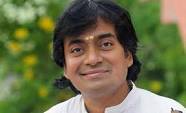
Concert - Raajkumar Bharathi

http://img716.imageshack.us/img716/5623/rkbharathi.jpg

  1. http://www.mediafire.com/?pa83jj6944qd4q9 Varnam - Ninnukori - Vasantha 
  2. http://www.mediafire.com/?py0vnzt6qvh51n7 Sidhdhivinaayakam - Mohanakalyaani 
  3. http://www.mediafire.com/?xwv8fmxxujs93w4 Thulasidhala - Maayaamaalavagowlai 
  4. http://www.mediafire.com/?eo6sft6ub7b7okt Aalaapanai - Kaambodhi  
  5. http://www.mediafire.com/?7ixskf1cs1sid56 Igamadano - Kaambodhi  
  6. http://www.mediafire.com/?ckvwvv657f3aaqv Bantureethi - Hamsanaadham 
  7. http://www.mediafire.com/?9jldwhvdhvxjlkm Aalaapanai - Karaharapriya  
  8. http://www.mediafire.com/?22ac9uzl0yqcyme Violin  
  9. http://www.mediafire.com/?bcilx5e4b1n74s4 Pakkala nilapadi - Karaharapriya 
  10. http://www.mediafire.com/?spbnxnh2f2a3qn5 Sharanu sharanu  
  11. http://www.mediafire.com/?eybfb8i7d3i66te Aaduvome
  12. http://www.mediafire.com/?tg51en0ayexbcrm Laali govinda - Neelaambari 
  13. http://www.mediafire.com/?447yiqozia2928a Thillaana - Brindhavani and Mangalam
Courtesy: Sangeethapriy.org.

...that how bad things may look right now means nothing.
It's how good you know they can look with God's help
that counts. 

Life has a habit of changing itself completely around in
24 hours. Heck, in 24 minutes sometimes.

Don't you dare give up on Tomorrow because of the
way things look Today. Don't even think about it...

Sunday, June 19, 2011

Concert - S.P. Ramh

http://img801.imageshack.us/img801/8135/spramh.jpg

  1. http://www.mediafire.com/?fxnyiq6xifq8zjm Varnam - Neeve gathi - Nalinakanthi 
  2. http://www.mediafire.com/?7p9cpd5fs48zu5p Gajavadhanaa - Shriranjani  
  3. http://www.mediafire.com/?62ur2n3t9fwjdjk Kanjadhalaaya - Kamalamanohari 
  4. http://www.mediafire.com/?fkgccnj5zc1k4c7 Bantureethi - Hamsaanandhi 
  5. http://www.mediafire.com/?7i4wh568sw57y7o Saamajavaragamana - Hindholam 
  6. http://www.mediafire.com/?a5a068odc76s27i Smarane ondhe - Malayamarutham 
  7. http://www.mediafire.com/?u1257oik1bm5vu2 Naadha thanum - Chiththaranjani 
  8. http://www.mediafire.com/?unrzdsg4ps55119 Aalaapana - Sankarabaranam 
  9. http://www.mediafire.com/?padsce82yd4ojmj Endhuku peddaala - Sankarabaranam 
  10. http://www.mediafire.com/?jc4664ysm8sw9a7 Thani  
  11. http://www.mediafire.com/?jj7063xmjiwapbc Ohm Shaanthi - Bhajan 
  12. http://www.mediafire.com/?63qmzni8lk88riw Venkatachala nilayam - Sindhubairavi 
  13. http://www.mediafire.com/?cnxczw8gcahkpp0 Sloka - Raagamalika  
  14. http://www.mediafire.com/?176l2b684acc04l Maadhava maamava - Neelaambari 
  15. http://www.mediafire.com/?wjxp2ravm6ha6jo Thillaana - Maand  
  16. http://www.mediafire.com/?v0ecwoq0082daze Thillaanaa - Brindhaavana saaranga 
  17. http://www.mediafire.com/?1cc5ddg1tf8lwqf Mangalam
Courtesy: Sangeethapriya
    ....that your thoughts create your reality. Your mind is
    more powerful than you know.

    Are you worried about something right now? Are you
    feeling unsure about something these days? God invites
    you to change your thinking. Miracles seldom occur in
    the lives of those who do not consider them possible. 

    There could be a miracle waiting for you this minute.
    Please make room for it in your thinking. Thanks.

    Ladies ! Please excuse me


    Why are wives more dangerous than the Mafia? The mafia wants either ur
    money or life... The wives want both!
    ====

    Marriage is like a public toilet Those waiting outside are desperate to
    get in & Those inside are desperate to come out.

    ====

    No Man Can Ever Be Satisfied
    with 4 things in life.
    (1) Mobile
    (2) A utomobile
    (3) TV
    (4) Wife
    Because there is always a better model in neighborhood.

    ===

    Searching these keywords on Google `How to tackle wife?`
    Google search result, `Good day sir, Even we are searching`.

    ===

    Compromising does not mean you are wrong and your wife is right. It
    only means that the safety of your head is much more important than
    your ego!

    ===

    Imagine living with 3 wives in one compound and never leaving the house
    for 5 years.Osama Bin Laden must have called the US Navy Seals himself!

    ===

    Whisky is a brilliant invention. One double and you start feeling
    single again.

    ===

    A friend recently explained why he refuses to get to married.
    He says the wedding rings look like miniature handcuffs.


    ===


    It takes thousand workers to build a castle, Million soldiers to protect
    a country, but just One woman to make a Happy Home --------- A Good
    Maid!

    ===

    Funny quote on a husband`s T-Shirt:
    All girls are devils,
    but my wife is the queen
    --
    --
    --
    --
    --
    --
    of them

    "Jokes on MEN are welcomed from ladies 
    I rarely find jokes on men and husbands. I know these jokes are created by men. Why not ladies crack more jokes on men? " I will be glad to post them.

    Blogger Harisankar said...
    they keep it in their minds. Coz if you let it out in a joke you lose laughing at it for the rest of your life. Why kill the golden duck?
    June 19, 2011 11:21 AM
    Delete
    Anonymous Anonymous said...
    Dear Sir Sri vaithinathan Hariharan I had a hearty laugh. Definitely no offence. Just a relaxation definitely not at the cost of women. I want to send the following which I was able to find during browsing. A Woman's Prayer: I pray for Wisdom, to understand a man. I pray for Love, to forgive him and I pray for Patience, for his moods. This is because if I pray for Strength I'll just beat him to death. Unusual Funeral A woman was leaving a convenience store with her morning coffee when she noticed a most unusual funeral procession approaching the nearby cemetery. A long black hearse was followed by a second long black hearse about 50 feet behind the first one. Behind the second hearse was a solitary woman walking with a heavy dog on a leash. Behind her, a short distance back, were about 200 women walking single file. The woman was so curious that she respectfully approached the woman walking the dog and said, "I am so sorry for your loss, and I know now is a bad time to disturb you, but I have never seen a funeral like this. Whose funeral is it?". Pat came the reply, "My husband's." "What happened to him?" The woman replied, "My dog attacked and killed him." She inquired further, "Well, who is in the second hearse?" The woman answered, "My mother-in-law. She was trying to help my husband when the dog turned on her." A poignant and thoughtful moment of silence passed between the two women. "Can I borrow the dog?" "Get in the line." With warm regards ravi
    June 19, 2011 4:20 PM
    Delete

    Saturday, June 18, 2011

    A complaint letter

    http://img695.imageshack.us/img695/3954/5163ykfrtfl.jpg


    I am arrive by passenger train Ahmedpur station and my belly is too much swelling with jackfruit. I am therefore went to privy. Just I doing the nuisance that guard making whistle blow for train to go off and I am running with lotaah in one hand and dhoti in the next when I am fall over and expose all my shocking to man and female women on platform. I am got leaved at Ahmedpur station. This too much bad, if passenger go to make dung that dam guard not wait train five minutes for him. I am therefore pray your honour to make big fine on that guard for public sake. Otherwise I am making big report to papers.

    Okhil Chandra Sen wrote this letter to the Sahibganj divisional railway office in 1909. It is on display at the Railway Museum in New Delhi. It was also reproduced under the caption Travellers Tales in the Far Eastern Economic Review.

    Any guesses why this letter is of historic value?

      So please don't think any idea is stupid and discard it.  Always Speak up. 

    Blogger Harisankar said...
    such a thing had to happen for the idea of toilets in train!? the raj was retard or something!.
    June 18, 2011 10:57 PM
    Delete
    Blogger BHASKARAN19 said...
    But the fact remains even after 12 years of introduction - the toilets are badly maintained, stinking, no water. This was highlighted in ANNIYAN also, but we see movies only for entertainment and we do not take the real message. regards bhaskaran
    June 19, 2011 7:03 AM


    Wednesday, June 15, 2011

    Do you know ?

    http://img89.imageshack.us/img89/5531/07f4cf518.jpg
    I was making a presentation of holidays for my office  and while doing that I noticed Govt of India's National and Public Holidays list 2011,i.e compulsory national government declared holidays  are only 14 and surprisingly the maximum number of holidays are for ISLAM [4] followed by INDIAN GOVERNMENT [3] followed by Christians and HINDUS [2] each ,followed by JAINS,BUDDHISTS AND SIKHS [1] EACH 
    Date of HolidayName of HolidayDay
    26- 1-2011Republic DayWednesday
    16-2-2011Id-E-MiladWednesday
    16-4-2011Mahavir JayantiSaturday
    22-4-2011Good FridayFriday
    17-5-2011Buddha PurnimaTuesday
    15-8-2011Independence dayMonday
    31-8-2011Ramzan id(Idu'l Fitr)Wednesday
    2-10-2011Gandhi JayanthiSunday
    6-10-2011Dussera(Vijay Dashmi)Thursday
    26-10-2011Diwali(Deepavali) Lakshmi PoojaWednesday
    7-11-2011Bakri id(Idu'l Zuha)Monday
    10-11-2011Gurunanak jayantiThursday
    6-12-2011MoharramTuesday
    25-12-2011ChristmasSunday

    Above 14 holidays for the year 2011 is compulsory for all states, announced by Government of India as National Holidays. Addition to the above list as mentioned above, three days shall be decided from the below table by the Central Government Employees Welfare Co-ordination Committee in the State Capitals with consulting of state coordination committees.

    Additional holidays for states to local celebrations
    Date of HolidayName of HolidayDay
    14- 1-2011Makara SankrantiFriday
    15- 1-2011PongalSaturday
    8- 2-2011Panchami/Basanta PanchamiTuesday
    2-3-2011MahasivaratriWednesday
    20-3-2011HoliSunday
    4-4-2011UgadiMonday
    12-4-2011SriRama NavamiTuesday
    3- 7-2011Rath YathraSunday
    22-8-2011Janmashtami(Vaishnavi)Monday
    1-9-2011Ganesh/Vinayak chaturthiThursday
    9-9-2011OnamFriday
    4-10-2011Dussera(additional)Tuesday
    Sent by Mr. Balayogi
    Blogger Harisankar said...
    great we have so many holidays.
    June 15, 2011 11:24 PM
    Delete
    Blogger BHASKARAN19 said...
    Who knows that THE HINDU may ask the Govt of India to declare M.F.Hussain's birthday/deathday to be declared as national holiday and hence it may become 6 days for ISLAM from now on wards regards bhaskaran
    June 16, 2011 6:50 AM
    Anonymous Anonymous said...
    Dear Sir Sri Vaithinathan Hariharan On Holidays I want to state that during the period of myself in service( now retired)I was happy to sit at home and enjoy the holiday as I found it a break from exhaustive work schedule. Most of the employees do so. No attention is paid whether the holiday is due to this religion or that religion. I do not understand why people are not abvle digest the employees' holidays and I find that it is not charitable to attach religion and some other hidden apathy even to declaraton of holidays. How can one expect that the mere declaration that INDIA is a Hindu state will solve all the problems. I am remembered of the following story: An elderly man by accident enters a small island and he installs a sign of his choice and starts worshiping. People of the island asks him what was he doing.Hesimply said "I am Praying". He was asked "why" and for "what" He then informs that he prays to save the people of the island from treachery, infidelity, immmoral activities, thieving, telling lies, cheating, murder and many more evils. The people asked him the meaning of what he tabulated. He went on to give all the details about the evils he has tabulated. From that day the whole island started to practise the tabulate items. Here who is the cause. Through compromises evil has been spread and the very fundamental dictum of tolerance, simplicity, not to be peevish, not to accumulate arrogance, desist from proclaimig Hindus and Hidu Gods are to be saved and still continue to think that we are the best. Let us be more generous and accommodative. With warm regards ravi
    June 17, 2011 10:15 PM
    Delete

    Tuesday, June 14, 2011

    One more angle on Tambrahms


                                                                My maternal Grandfather

    Some time back, I posted here an article on Tamil Brahmins under the label "Tambrams" which was very well received by readers and receiving comments,even after two years. Here is another article which is equally interesting. This was sent to me by Mr. Seshadri Srinivasan. Please read this which is interesting.

    Tamil Brahmins: The best second-rate men in the world
    by N S Jagannathan


    This piece, it must be explained at the outset, is not a history of the Tamil Brahmins, or a gratulatory account of the community's famous achievers. It is more in the nature of a portraiture of the "average or the median" member of the species.

    In an endeavour of this kind seeking to crystallize the unique qualities of a whole people, it would be misleading to talk of the "tall poppies", the all-time greats, such as Sir T Muthuswami Iyer, G Subramania Iyer, Subramania Bharati, Rajaji, Satyamurti, Sir C V Raman, Srinivasa Ramanujan, Madurai Mani Iyer or Ariyakudi Ramanuja Iyengar.

    It would be more appropriate to use (or misuse?) the well known statistical concept of the "Bell Curve": a graph showing the distribution of the range of any characteristic within a population — say, height, weight, intelligence etc. This is typically a bell-shaped figure with a single well-defined maximum, an initial steep slope and a gradual tapering further down. Since such a distribution is common in nature, it is also known as "normal distribution". The maximum number in the frequency distribution, also called the "mode", occurs roughly in the middle. It would be permissible to take persons in this range as authentic representatives, warts and all, of the whole community. What follows is one man's perception, necessarily subjective, of the defining qualities of this "representative" Tamil Brahmin.

    Those who have seen the 1971 Satyajit Ray classic Seemabaddha (Company Limited) would recall a cameo in it of a conversation between the yuppie Bengali hero of the film and his personal secretary, a middle-aged Tamil Brahmin. The young man "on the make" is a "covenanted officer" in one of those once-famous British Merchant Houses of Calcutta. The two have forged a relationship of extraordinary mutuality based on trust and admiration for each other's contrasting qualities. Tormented by the neurosis of upward mobility, particularly by his frustration over a decisive promotion still eluding him, the young executive asks his elderly secretary the secret of his sangfroid, his total imperviousness to tension and worry. The secretary sagely replies: "Sir, it is quite simple. On a cold day, when the hearth-fire is on, the best position to occupy is the place that is neither too near the fire nor too far. If you are too near, you might get singed. If you are too far, you would not get the necessary warmth."

    Here, if you like, is the metaphor of the working philosophy of the archetypal Tamil Brahmin. What this illustrates is that the Tamil Brahmin prefers to function (and function efficiently) from behind the scene, rather than thrust himself to the front, with all the hassles and hazards of overexposure and too public a presence. His preferred position is the row behind the throne (as when the pompous minister briefs the Press). His passion for anonymity is notorious. His real successes are private ones secretly to be gloated over by himself or at the most in the intimacy of chosen friends. Even his jokes are private, with his cynical wit much in evidence when among intimates. His forte is wit rather than humour, unlike, say, the Punjabi's. He is a master of the double entendre and is an inveterate punster, often bilingual and sometimes even trilingual. A random example: At the height of Japanese commercial expansionism in Europe and America in the seventies, an envious joke was that the Japanese multinational Sony had bought up-the Leaning Tower of Pisa and re-erected it in Tokyo. The Tamil Brahmin tourist in Japan watching the operation is supposed to have made the deadpan observation: "Nikkumo Nikkado" which is Tamil for "God knows whether it will stand or fall."

    An apocryphal quip describes the Tamil Brahmins as "the best second-rate men in the world." Rude as this remark is on the face of it, it is in many ways perceptive and could well be considered a compliment. (It is certainly better than being considered the worst first-rate men.) The sneer latches on to the central characteristic of a Tamil Brahmin — his instinctive preference for anonymous functionality behind the scene rather than high profile highfalutin from centre-stage. A Tamil Brahmin would readily endorse E M Foster's famous prayer: "Let no achievement on an imposing scale ever be mine."

    This ineradicable modesty coexisting with proven competence is the reason why his preferred professions are the great anonymous ones, such as the Civil Service, where it is easy — indeed the required trait — to be "the faceless bureaucrat." He lets his nominal boss, the publicity-hungry politician, boast about policies whose details his ingenious mind has given legal and formal shape to, with all the ambiguities and obfuscations safely hidden in the fine print. Give him a brief of your intention, and he will give it a shape that would pass muster with a trusting public. Like the prestidigitator, he gloats in secret not over the illusion that the public laps up but over his real skill of sleight of hand that had made the illusion possible. An extreme example of this is the Tamil Brahmin folklore to the effect that some of the brilliant judgments of the English judges in pre-Independence Madras High Court were really written by their Tamil Brahmin bench clerks.

    In the public sphere, the representative Tamil Brahmin is an apolitical pragmatist rather than a passionate ideologue, a trait that makes him an ideal public servant rather than a political leader. Temperamentally, he is a natural Tory, or at best, a "Fabian", believing in the art of the possible rather than in the impossible dream. A British Conservative of the 1960s famously said once: "Let the socialists dream their dreams and scheme their schemes: we Conservatives have a job to do." This sums up admirably the Working philosophy of the Tamil Brahmin administrator. Grand gestures and conspicuous posturing are not in his blood. Risk averse by temperament and playing for safety, he is rarely given to extreme positions or assertive stances in public. A pugnacious Tamil Brahmin is a contradiction in terms, though high profile T N Seshan, former Chief Election Commissioner, might seem to disprove this assessment. (In any case, he is a "Palghat Tamil Brahmin", a sub (?) species that deserves a special study in itself!)

    Intellect rather than imagination is the Tamil Brahmin's forte. (Harsher judges might even say that intelligence rather than intellect is a Tamil Brahmin's strength.) Typically, a Tamil Brahmin is a professional executive or administrator rather than a professional politician or entrepreneur or a labour leader. It can even be argued that this is a throw-forward of the ancient Varna taxonomy: of the Brahmin — the purohit and the counsellor, in contrast to the Kshatria (the forerunner of the modern-day politician), Vaisya (the prototype of today's entrepreneur) and the Labour leader, (the champion of the working class, the modern-day shudras.) Thus it is that you find that some of the greatest Diwans of Indian States of yore such as Seshadri Iyer, C P Ramaswami Iyer, T T Krishnamachari, and T Vijayaraghavachari were vintage Tamil Brahmins.

    The Tamil Brahmin is by instinct a Rajabhakta, putting his ingenious mind at the disposal of the ruler of the moment for any purpose the latter chooses. But it is not a passive role of the flunkey, doing the bidding of his master. His manifest intellectual superiority makes him an ideal Amaathya, or Counsellor. Many a ruler of the former princely States had the good sense to listen to their Tamil Brahmin Diwans: this was true even when the advice was to quietly quit the scene collecting their privy purses when Sardar Patel ran a coach and four through their puny sovereignties. Quite often, some of these princelings have been saved from the extreme consequences of their rather lurid private lives by the sagacious intervention of their counsellors.

    Ostentatious wealth is rare in this community, testifying once again that a representatve Tamil Brahmin abhors extremes. Though poverty and privation are not unknown in the community the median Tamil Brahmin has a reasonable competence that meets his un-extravagant needs. Thrift comes naturally to him to the point of stinginess.

    A famous story used to go round the Indian Express editorial anterooms in the days of Ramnath Goenka. A Marwari friend asked RNG why he paid his Punjabi editors fabulous salaries while his Tamil Brahmin editors were paid a pittance. Ramnathji is supposed to have replied: "Arre Bhai! My Punjabi editor gargles his mouth with rose water after brushing his teeth. My Tamil Brahmin editor is content with rasam sadam. To everyone according to his needs. Pure Communism!"

    Competent, conventional and conformist, the median Tamil Brahmin is rarely adventurous or conspicuously unorthodox. Resilient and quickly adaptive, he would never wish "to stand out" as too heterodox or for that matter excessively orthodox either, despite the fact that until recent times, the "caste mark" on his forehead was a give-away.

    A favourite expression of approbation in the community is "God-fearing." But his conformity is a convenience rather than conviction, arising partly from his reluctance to be the "odd man out". Ancient taboos atavistically present in him are observed in letter rather than in spirit as in the obligatory rituals regularly performed. His house has its sacred and secular spaces clearly demarcated. Even today, in villages and small towns where the "flat culture" has not yet found its way, a traditional Tamil Brahmin house has the ancient layout of increasingly "sacred" space as one goes inwards with the right of admission to each strictly caste-graded. In cities, where the "drawing-cum-dining room" layout has insinuated itself into domestic architecture, the Pooja room is inviolable.

    A Tamil Brahmin's modernity is equally skin-deep, readily discarded in the privacy of his home. He eagerly sheds his trousers and shirt the moment he is back home and gets back to his comfortable lungi and bare chest. Until recently, alcohol was not a domestic amenity even among the more affluent and "modern" Tamil Brahmins and was meant mostly for others who might visit. Though for professional reasons and for compulsions of livelihood, he will go to the end of the earth, he is by no means as cosmopolitan, readily jettisoning his cultural baggage and merging with homogenized non-descript new environment. His domestic pieties are preserved whether in New Delhi or New Jersey and his twin-passion of temple worship and Carnatic music are never ever abandoned wherever he is.

    Like the Jew to whom he is often compared, he is a great survivor. One of the earliest communities to have eagerly embraced the exhilarating new opportunities offered by English education in the early 19th century, the Tamil Brahmins had acquired a near monopoly of the much coveted Government employment of the times. This had naturally led to upper caste non-brahmin resentment, which effectively politicised itself in the first decades of the last century. When this self-consciousness captured political power and formed governments in the 1920s in the Madras Presidency, it pursued vigorously a policy of reservation that ended the Brahmin's earlier monopoly of government jobs. This was the signal for the great Tamil Brahmin Diaspora that still continues.

    Denied opportunities at home, the Tamil Brahmin sought and found newer pastures in Bombay, Delhi and Calcutta. Caste-neutral professions such as accountancy and journalism became the alternatives. Still later, newer professional opportunities abroad, notably in the United States, became the magnet. And with the ascendancy in recent years of the new information technology where brainpower is more important than capital investment, this dispersal has become a flood. Almost every English-educated middle class Tamil Brahmin family has a younger member abroad.

    Like much else in the world and in this country, the Tamil Brahmin profile is no doubt changing. The younger generations are conspicuously deracinated and some of the unique qualities of this community are getting blurred and homogenized with the rest of the world. Older generations still around are often disconcerted by the fact that the young Yuppies are losing their unique traits such as the love of their mother tongue and routine absorption of domestic pieties in an ambience of soft Hinduism.

    Sanskrit slokas and Tamil Prabandam verses that used to reverberate in the house in the stillness of the evening are being heard less and less. Raucous rock music is displacing the softer Carnatic melodies and ancient civilities are being replaced by modern brusqueness in the attitude of the young towards the elders. But deep down, not much has changed. They are still the world's best second-rate men.

    The author, a former Editor of The Indian Express, is a distinguished scholar in English and Tamil. An English version of Kamba Ramayana edited by him was published last year.


    Blogger Varadarajan.R said...
    nice read.
    June 14, 2011 11:33 PM
    Delete
    Blogger manikandan said...
    very well written. Must read for all the Tambrahms.
    June 15, 2011 10:43 AM
    Blogger Harisankar said...
    long read
    June 16, 2011 8:28 PM
    Delete
    Harisankar said

    Behind every great iyer is another iyer and infront of both of them is the greater iyer woman. :))
    June 16

    hvaidaya said

    long reading inspired you to write another comment. So do not ignore anything.
    June 16


    Muralidhara Swamigal - Naama Sangeerthaname Dharmam

    http://img28.imageshack.us/img28/2539/muralidharaswamigal.jpg
    1. http://www.mediafire.com/?jcv90jii6c03wij Volume - 1  
    2. http://www.mediafire.com/?nwxapc66rnz69rk Volume - 2
    Blogger K Ravisankar said...
    Sir, Wonderful piece. But the orator is Muralidhara swamigal and not Jakki vasudev.
    June 14, 2011 9:28 PM
    Delete
    Anonymous Anonymous said...
    Sir. The sppech is given by sri murakidhara swamigal. so change the photograph.
    June 16, 2011 4:37 PM
    Delete
    Blogger hvaidya said...
    Is he (who is in the photo), the right person?
    June 16, 2011 8:54 PM
    Blogger K Ravisankar said...
    Yes.. He is. There are many such wonderful pravachanams by him. He is also the most preferred in small screen morning hours.
    June 21, 2011 8:15 AM

    Sunday, June 12, 2011

    Concert - Mandolin Srinivas

    The concert of Mandolin Srinivas under Concert 211 was reported as commercial CD. Hence I am replacing the same with this.

    Sent by Varadarajan Raju
      ..that kindness is one of your wonderful traits, but
      where you really shine is in your generosity.

      It is one thing to be kind, and you are that. Yet it is quite
      another thing to also be unfailingly generous--with your
      time, your talent and energy, your willingness to
      "be there" for others, and yes, with you money.

      You are a generous person, and that takes kindness
      to a new level. Be happy in the knowing of this.